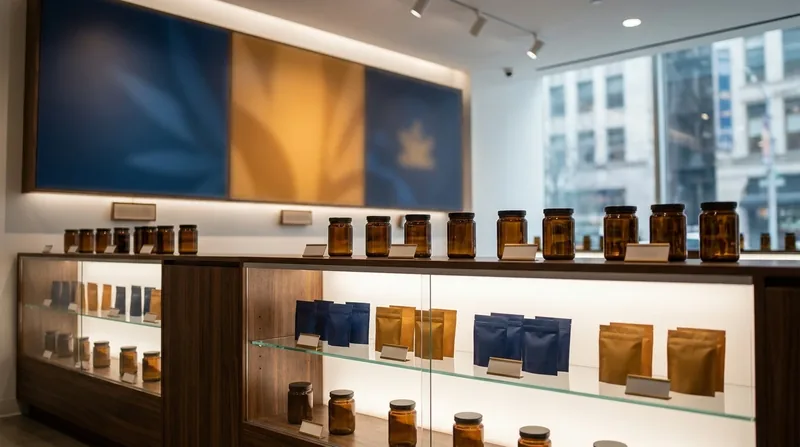
How to Start a Cannabis Consumption Lounge in New Mexico: Consumption Area License
How to Start a Cannabis Consumption Lounge in New Mexico: Consumption Area License
A New Mexico cannabis consumption area license is the state permit that lets adults use cannabis on a licensed premises. In New Mexico it comes from the Cannabis Control Division (CCD) of the Regulation and Licensing Department. Most people planning a lounge start with the building and the lease, then discover the license rules rule out their plan. This guide covers what the license requires, what to have ready before you apply, and the order that keeps you from paying for a space you cannot use.
Informational content only. This article is not legal, tax, or licensing advice. Rules, fees, and application steps change, and the CCD and your local government make the final decisions. Talk with a New Mexico attorney and a CPA before you sign a lease or file anything.
What the consumption area license allows and limits
The license is an annual permit issued by the CCD under 16.8.11.9 NMAC, which was amended on May 7, 2024. The annual fee is $2,500. Before you can hold one, you must meet all of the qualifications for a cannabis retailer under 16.8.2.49 NMAC, so plan to document your retailer qualifications as part of the application.
The license comes in two classes, and the class decides how much space and ventilation work you need:
- Type I allows consumption on site, except through the respiratory system. This covers edibles and similar products. Type I is the simpler build because you do not need a smoke management plan.
- Type II also allows respiratory consumption, meaning smoking and vaping. You need a designated smoking area, or an outdoor area around the building, shown on your site diagram. The area must keep smoke from reaching indoor workplaces under the Dee Johnson Clean Indoor Air Act.
Two hard limits shape the business model. First, alcohol cannot be sold or consumed in a consumption area. Second, a licensee cannot also hold a Liquor Control Act license for the same premises. If you plan to serve drinks, a cannabis consumption lounge is the wrong license for that building.
Local governments may deny consumption area licenses. Zoning, building, and fire codes all apply to the space. A state approval does not override a city or county refusal, so local approval is a gating step, not a formality.
Materials and information you need before you start
- A business name that meets New Mexico naming rules (the name must include a required entity designator such as LLC, and it must be distinguishable from existing names on the Secretary of State database)
- Articles of Organization for an LLC, or Articles of Incorporation if you choose a corporation
- A New Mexico registered office and a registered agent for service of process
- A signed lease or letter of intent for a specific address, with the use confirmed in writing by the landlord
- Written zoning confirmation from the city or county planning office
- A site diagram and floor plan, with a smoke management plan if you choose Type II
- A Business Tax Identification Number (BTIN) from the Taxation and Revenue Department
- Retailer qualification documents that satisfy 16.8.2.49 NMAC
- A verification process for checking the age and identity of every customer (21 or older)
- ANSI accredited food handler certificates for any staff who handle edibles
- The $2,500 annual license fee and any local registration fee
Fees and costs at a glance
The table below lists the main fees. Where a fee is not listed, confirm it on the agency page.
| Item | Amount | Agency | Notes |
|---|---|---|---|
| LLC Articles of Organization | $50 | New Mexico Secretary of State | Filed online only through SOS Enterprise |
| Expedited LLC filing, same business day | $150 | Secretary of State | Received before 2:00 p.m. (next business day if later), paid separately, nonrefundable |
| Expedited LLC filing, two business days | $100 | Secretary of State | Paid separately, nonrefundable |
| Name reservation | $20 | Secretary of State | Lasts 120 days, not renewable |
| Business Tax Identification Number | No charge | Taxation and Revenue Department | A tax registration, not a license |
| Consumption area license, annual | $2,500 | Cannabis Control Division | Set under 16.8.11.9 NMAC, amended May 7, 2024 |
| Local business registration | Check with your city or county | Local government | Flat annual registration, amount varies by city or county |
| Corporate franchise tax (corporations only) | $50 per year | Taxation and Revenue Department | Corporations also file a biennial report at $25 |
Step-by-step: how to get the license
Step 1: Form the entity
Most operators form an LLC because it is the lowest-cost option that still separates personal and business liability. File the Articles of Organization for $50 through the SOS Enterprise Business Filing System at enterprise.sos.nm.gov. The Secretary of State does not publish a standard turnaround. All filings are reviewed before the certificate issues, and you get an email for approval, rejection, or correction. If your deadline is tight, expedited service costs $150 for same business day service or $100 for two business days. Those fees are paid separately and are nonrefundable.
If you plan to trade under a name other than the LLC name, state that name in the Articles of Organization. New Mexico has no statewide DBA or assumed-name registration, so the Articles are the place to disclose it. Ask the CCD whether it reviews trade names, because a name that looks like a dispensary or a product brand can raise questions during review.
An LLC does not file an annual or biennial report with the Secretary of State and pays no LLC franchise tax. A corporation, by contrast, files a biennial report at $25 and owes the $50 annual franchise tax. If you are weighing a corporation for tax reasons, confirm the treatment with a CPA first.
Step 2: Choose Type I or Type II before you sign a lease
The class you choose determines your ventilation design, your floor plan, and the outdoor space you need. Type I is a simpler build. Type II requires a designated smoking area or an area around the building, and that area must be shown on your site diagram. A Type II design that depends on a patio the landlord has not approved will fail review.
Confirm with the CCD how the consumption area license relates to any retailer license you hold or plan to apply for, and in what order the agency reviews them. The CCD sets the current application steps, and those steps have changed before.
Step 3: Rule out alcohol at the premises
A consumption area cannot sell or serve alcohol, and you cannot hold a Liquor Control Act license for the same premises. Check the building's existing liquor license history before you sign. Many commercial buildings have a prior bar or restaurant tenant, and an active liquor license at the address can block your application.
Step 4: Secure zoning and local approval
Local governments may deny consumption area licenses, and zoning, building, and fire codes apply to the space. Before you sign a lease, ask the city or county planning office in writing whether a consumption area is a permitted use at that address. Then contact the local building and fire authorities for the occupancy and ventilation requirements.
Ask about the local business registration as well. Cities and some counties charge their own flat annual registration. The amount varies, so get the figure from the local office and budget for it.
Step 5: Build the site diagram and ventilation plan
The site diagram is the document reviewers look at first. Draw the full building, the consumption area, the seating layout, and the entrance and exit points. For Type II, add the designated smoking area or the outdoor area around the building, and show how smoke is kept from reaching indoor workplaces. Have a mechanical engineer or HVAC contractor review the plan before you submit it, and keep their written sign-off with your application.
Step 6: Register for tax with the Taxation and Revenue Department
New Mexico has no general business license, but the Taxation and Revenue Department (TRD) issues a Business Tax Identification Number for free. The BTIN is a tax registration that lets you report gross receipts tax. It is not a substitute for the CCD license, so do not treat it as one. Register online at tax.newmexico.gov, and check the registration guidance at who must register a business.
New Mexico has no sales tax. The seller pays a gross receipts tax, and the state rate is 4.875%. Ask the TRD how the tax applies to your specific sales and what filing schedule you will follow. Local rates can differ, so confirm them with the TRD before you set prices.
Step 7: Set up staff checks and training
Every customer must be checked for age and identity. The minimum age is 21, and staff must verify it at entry, not after a customer is inside. Write the procedure down, train every employee on it, and keep a log of training dates.
Staff who handle edibles need an ANSI accredited food handler course. Get the certificates before the first shift, and keep copies on file for inspections. If you hire staff who never handle food, document that they are not assigned to edible handling.
Step 8: Assemble and file the CCD application
Bring the pieces together into one package: entity documents, the BTIN, retailer qualification documents under 16.8.2.49 NMAC, the site diagram and ventilation plan, written zoning and local approvals, staff training records, and the $2,500 fee. Check with the CCD for the current application form, the filing method, and the processing time, because the agency sets those details.
Request a pre-application conversation with the CCD if one is offered. Walking a reviewer through the diagram before you file can catch a problem that would otherwise cost you a full review cycle.
Step 9: Plan for renewal and ongoing compliance
The license fee is $2,500 per year, so budget for renewal from the first day of operation. Keep the site diagram current with any remodel, and get local approval for any change that affects the consumption area. Store ID verification logs and training records in a form that can be produced on request. Confirm the renewal deadline and the renewal process with the CCD before your first renewal window opens.
Common mistakes to avoid
- Signing a lease before zoning is confirmed. A landlord's permission does not replace a local zoning decision, and a denied location leaves you holding the lease.
- Designing Type II without the smoke path. A smoking area that is not on the site diagram, or that lets smoke reach indoor workplaces, is a fast way to a rejected plan.
- Confusing the BTIN with the license. The BTIN is free tax registration. The consumption area license is a separate permit with a $2,500 annual fee.
- Looking for a state DBA filing. New Mexico has no statewide DBA or assumed-name registration. Disclose a trade name in the Articles of Organization instead.
- Assuming an LLC needs an annual report. New Mexico LLCs file no annual or biennial report with the Secretary of State. Local registrations are a separate obligation, so check those.
- Planning around alcohol. If the building has an active liquor license or the business plan includes alcohol, the lounge will not work at that premises.
- Hiring before training. Staff who handle edibles need an ANSI accredited food handler course first.
- Relying on old fee information. Confirm the current fee and application steps directly with the CCD, not with a forum or a third-party summary.
Practical tips
- Get the local answer first. A written yes from the city or county planning office is the cheapest risk control you can buy.
- Price the ventilation early. For Type II, ventilation is often the largest build cost. Get a contractor estimate before you commit to the space.
- Use free help. The New Mexico Small Business Development Center at nmsbdc.org offers business planning support, and the SBA New Mexico district office at sba.gov/district/new-mexico lists local resources.
- Keep a single master file. Store the entity filings, the BTIN, the lease, zoning letters, diagrams, and training records together so you can answer a regulator in one pass.
- Ask about naming early. A name change after filing costs time and money, so settle the trade name before you file the Articles.
What to expect once you are licensed
Once the license is issued, a lounge may offer on-site cannabis consumption within the limits of its class and its local approvals. Type I covers consumption other than through the respiratory system, and Type II adds respiratory consumption in the designated area. Expect ongoing obligations: the $2,500 annual fee, age and identity checks, staff training, and any local registration. Those obligations are the core of running a compliant lounge, so build them into your operating budget.
This guide does not promise a timeline, an approval outcome, or revenue. Approval depends on your site, your local government, and the CCD's review, and the Secretary of State does not publish a standard processing time for filings. Plan for delays, and keep your launch date flexible until every approval is in hand.
Marketing and product claims are also limited. Do not describe cannabis as treating, curing, or preventing any disease or condition, and do not make health claims about any product. Write marketing that describes the space, the service, and the rules you follow, and have counsel review every customer-facing claim before it goes live.
Next steps
- Confirm the current application steps and fees with the Cannabis Control Division of the Regulation and Licensing Department.
- Get written zoning and local approval for a specific address.
- Form the entity through the New Mexico Secretary of State and register for a BTIN with the Taxation and Revenue Department.
- Choose Type I or Type II, then finish the site diagram and ventilation plan.
- Assemble the CCD package, budget for the $2,500 annual fee, and schedule a pre-application review if the CCD offers one.
Disclaimer: This article is informational content, not legal or tax advice. Consult a qualified New Mexico attorney and a CPA before making decisions about your entity, your lease, your tax registration, or your license application.
Keep exploring: related New Mexico guides
- How to Start an Assisted Living Facility or Adult Day Care in New Mexico
- How to Start a Cannabis Courier Business in New Mexico
- How to Start a Non-Medical Home Care Business in New Mexico
- How to Start a Cannabis Cultivation Business in New Mexico
- How to Start an LLC in New Mexico
- New Mexico Business License
- How Much Does It Cost to Start a Business in New Mexico
- All New Mexico business types
- Every New Mexico guide in one place