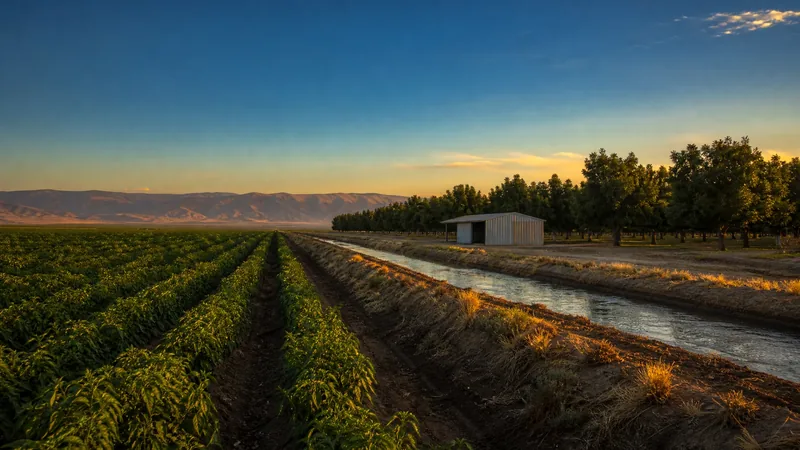
How to Start a Chile or Pecan Farm in New Mexico: Water Rights, NMDA Rules and Selling Direct
How to Start a Chile or Pecan Farm in New Mexico: Water Rights, NMDA Rules and Selling Direct
New Mexico ranks near the top of the country for both chile and pecans. The NMDA and USDA NASS 2024 statistical bulletin (August 2025) ranked New Mexico first nationally for chile production and second for pecans in 2024. Total agricultural production in the state was about $3.99 billion in 2023. Demand for New Mexico chile farming is strong, but most new growers get stuck on three things long before they plant: water, the business entity, and what they are allowed to sell directly.
This guide covers the order that avoids the most expensive mistakes. Confirm water first, then set up the business, register for taxes, check local rules, and only then plan direct sales. This article is informational content, not legal or tax advice. Before you sign a land contract or form an entity, talk with a New Mexico attorney and a CPA.
What You Need Before You Start
Gather these items before you commit money to land, equipment, or seed:
- A water right attached to the parcel, a written lease from a right holder, or membership in an acequia or irrigation district that delivers water to you.
- An OSE permit for any new use of water that requires one. Confirm the status with the Office of the State Engineer district office.
- A business name that meets New Mexico naming rules, and a chosen structure: LLC, corporation, or sole proprietorship (which has no state filing).
- A free Business Tax Identification Number (BTIN) from the Taxation and Revenue Department (TRD).
- A crop plan for chile or pecans, with a calendar of planting, irrigation, labor, and harvest.
- For direct sales: a food handler card, labels, and written answers from NMED on any product the Homemade Food Act does not clearly cover.
Step 1: Confirm Water Rights Before You Buy Land
Water decides whether a farm is possible. Anyone who wants to use water in New Mexico needs a permit from the Office of the State Engineer (OSE). The state follows prior appropriation, which means that in a shortage the oldest valid rights are served first. Most surface water and groundwater in the state is fully or over appropriated, so a brand-new irrigation permit is hard to get.
For most new farmers, the practical route is buying or leasing land that already carries a water right, or land inside an acequia or irrigation district. Before you buy, do three things:
- Call the OSE district office and ask who holds the right on the parcel, how much water it allows, what purposes it covers, and whether the right is tied to that land or can be moved.
- Ask the acequia or irrigation district for its current assessments, its delivery schedule, and whether there are any open issues affecting the parcel.
- Get the answers in writing and make the purchase or lease contingent on them.
Common mistake: assuming you can drill a well on any parcel. Confirm the water source before you sign, not after.
Step 2: Choose Chile or Pecans Based on Calendar and Capital
Chile is an annual crop. It is planted in spring and harvested through late summer and fall, so one season tests your irrigation, labor, and sales plan within a year. Pecans are perennial trees. An orchard takes several years to establish before it produces a full crop, so money spent on land and trees stays tied up for a long time.
Many growers run both: chile for cash flow and pecans as the long-term investment. Decide which one you start with, because the equipment, labor, and water timing for each are very different. Either way, your first New Mexico chile farming plan should show how you will pay for the years before the farm earns steady income.
Step 3: Form the Business Entity
A small farm usually chooses among three structures: a sole proprietorship, a limited liability company (LLC), or a corporation. A sole proprietorship has no state filing. An LLC is the most common choice for a small farm. Its state filing is inexpensive, and an LLC taxed as a default pass-through does not owe the $50 corporate franchise tax. Corporations carry more filing and tax obligations. Confirm the choice with a CPA before you file.
If you form an LLC, file through the SOS Enterprise Business Filing System at enterprise.sos.nm.gov:
- Search the name at the business search. The name must contain the words limited liability company or limited company, or the abbreviation LLC, L.L.C., LC, or L.C., and it must be distinguishable from existing names.
- Optional: reserve the name for $20. The reservation lasts 120 days and cannot be renewed.
- File the Articles of Organization for $50. The Secretary of State does not publish a standard turnaround. Filers are notified by email of approval, rejection, or correction. Expedited service costs $150 for same business day handling if received before 2:00 p.m. (next business day if received later), or $100 for two business day service. Expedited fees are paid separately and are nonrefundable.
- If you will trade under a name other than the LLC name, state that name in the articles. New Mexico has no statewide DBA or assumed-name registration, so the articles are the only state place for it.
- Name a registered agent for service of process. The agent must be a New Mexico resident, or a business with a New Mexico place of business at the registered office address. The registered office must be in New Mexico and may match your principal place of business.
| Item | Fee | Notes |
|---|---|---|
| LLC Articles of Organization | $50 | Filed online through SOS Enterprise |
| Name reservation | $20 | Holds the name for 120 days, not renewable |
| Expedited LLC filing | $150 or $100 | Same business day (before 2:00 p.m.) or two business days, paid separately |
| LLC annual or biennial report | None required | New Mexico LLCs file no report with the Secretary of State |
| LLC change of registered agent or office | $20 | Applies to successor agents too |
| Corporation Articles of Incorporation | $100 | First biennial report due within 30 days after the certificate is issued |
| Corporation biennial report | $25 | Due on or before the fifteenth day of the fourth month after the taxable year ends |
| Corporation change of registered agent or office | $25 | Corporations only |
Step 4: Register for Taxes
New Mexico has no general statewide business license. Your first tax step is the BTIN, which is free from TRD at tax.newmexico.gov. The BTIN is a tax registration, not a license. It lets you report gross receipts tax.
- Gross receipts tax (GRT): New Mexico has no sales tax. GRT is imposed on the seller. The state rate is 4.875%, and combined state plus local rates run from 5.25% to 9.4375% under the schedule effective July 1, 2026 through June 30, 2027. Your combined rate depends on where the sale happens, so confirm the rate for your location with TRD.
- Product coverage: ask TRD how GRT applies to each product you sell, including fresh produce and any processed item, and whether any deduction applies. Do not assume a product is exempt because it is food.
- Corporate income tax: a corporation pays a flat 5.9% of taxable income for taxable years beginning on or after January 1, 2025, plus the $50 annual corporate franchise tax reported on form CIT-1.
- Personal income tax: if you operate as a sole proprietor or pass-through, the income flows to your personal return. Individual rates run from 1.5% to 5.9% for tax years beginning on or after January 1, 2025, with the 5.9% top rate starting above $210,000 of taxable income for single filers.
Common mistake: believing that because New Mexico has no sales tax, your sales carry no tax. GRT applies to the seller, so price and bookkeeping must account for it from the first sale.
Step 5: Check City and County Registration
Cities and some counties charge their own flat annual business registration. The amount and rules differ from place to place, so check the city or county where the farm sits and any city where you sell. Operations in cities such as Las Cruces, Roswell, Artesia, Hobbs, Carlsbad, and Farmington may face city rules, while farms outside city limits may face county rules. Contact the city or county office directly and get the answer in writing.
Also check whether your operation needs an activity-specific license from the Regulation and Licensing Department (RLD). Do not assume that none applies. Farmers markets often set their own vendor rules, so ask the market before your first booth.
Step 6: Set Up Direct Sales Under the Homemade Food Act
New Mexico's Homemade Food Act allows direct-to-consumer sales of non-TCS foods, meaning foods that do not need time and temperature control for safety, without a state food permit. Whole fresh vegetables are in that group. You still need a food handler card and proper labeling. Salsa and cut produce are not allowed under this route, and other processing requires an NMED food permit.
Whole fresh chile
Whole fresh chile is generally sold as produce, so it is the most natural direct-sale product for a chile grower. Before you rely on the Act, confirm with NMED's Food Program that your product fits the whole fresh vegetable category.
Roasted chile
Roasted chile is not listed in the Act either way. Do not sell it on the direct route until NMED confirms how it is treated. Ask NMED's Food Program. In Albuquerque, the city's Consumer Health Protection Division handles these questions and can be reached at 505-768-2738. Get the answer in writing before you set up a roasting station or a sales table.
Pecans
The Act's summary does not name pecans. Ask NMED before you sell pecans in any form that is not clearly covered, including shelled nuts or any pecan product.
Salsa, cut produce, and other processed goods
Salsa and cut produce are outside the direct route. Other processing needs an NMED food permit, so build that timeline into your plan before you develop a product line.
Step 7: Plan Expected Results Honestly
Your first seasons are about learning your water, soil, and buyers. A realistic business plan may show modest first-year revenue as you build a customer base, may show pecan income deferred for several years, and may treat direct sales as a supplement to wholesale rather than the whole business. Build your numbers on your own water allocation, your own acreage, and the buyer commitments you actually have, not on averages you have not verified.
Be careful with what you say about the product. FDA does not allow food labels or marketing to claim that a food treats or prevents disease. Describe chile and pecans by flavor, cooking use, freshness, and growing story. Avoid health claims on signs, labels, websites, and social posts. Use hedged language if you talk about the product's qualities, and keep your claims to what you can document.
Common Mistakes to Avoid
- Buying land before you have confirmed the water right in writing.
- Assuming a new water permit will be approved quickly or at all.
- Choosing an LLC name that does not include an approved ending.
- Leaving the registered agent requirement until after filing.
- Assuming that no sales tax means no tax on your sales.
- Selling roasted chile, salsa, or pecans on the direct route before NMED answers.
- Making health or disease claims on labels, signs, or social media.
- Skipping the city and county check because the farm is outside a major town.
Official Resources
- New Mexico Secretary of State business services: sos.nm.gov/business-services
- SOS Enterprise Business Filing System: enterprise.sos.nm.gov
- Business name search: enterprise.sos.nm.gov/search
- New Mexico Taxation and Revenue Department: tax.newmexico.gov
- TRD guidance on who must register a business: tax.newmexico.gov/businesses/who-must-register-a-business
- New Mexico Small Business Development Center: nmsbdc.org
- SBA New Mexico district office: sba.gov/district/new-mexico
The Office of the State Engineer, NMED, NMDA, and RLD are the agencies that answer the water, food safety, agriculture, and licensing questions in this guide. Find their current pages through the state's own sites, and confirm every fee and deadline with the agency before you rely on it.
Disclaimer and Next Steps
This article is informational only. It is not legal, tax, or water law advice, and it does not replace advice tailored to your land, crop, and sales plan. Agency rules and fees change. Before you buy land, consult a New Mexico water attorney about the water right. Before you form an entity or register for taxes, consult a CPA or business attorney about the structure that fits your situation.