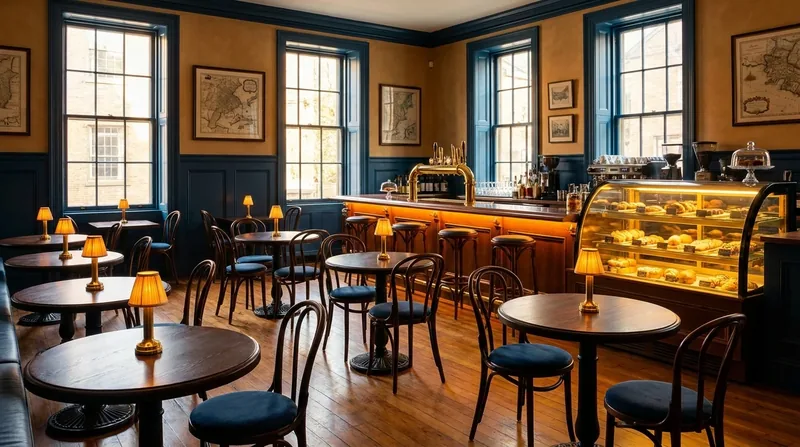
How to Start a Restaurant in New Mexico: NMED Permit, Liquor License and Local Registration
How to Start a Restaurant in New Mexico: NMED Permit, Liquor License and Local Registration
Starting a restaurant in New Mexico means working with several agencies, and none of them handles the whole job. The state does not issue a general business license. Your paperwork goes to the New Mexico Secretary of State for your entity, the Taxation and Revenue Department (TRD) for tax registration, the New Mexico Environment Department (NMED) for the food permit, the Alcoholic Beverage Control Division (formerly Alcohol Beverage Control) of the Regulation and Licensing Department (RLD) if you plan to serve alcohol, and your city or county for local registration. This guide covers how to start a restaurant in New Mexico in a practical order, and it notes the figures you should confirm with an agency.
What New Mexico requires and what it does not
New Mexico has no statewide general business license. The state's own business navigator lists three universal steps: register the legal entity with the Secretary of State, obtain tax ID numbers through TRD at no charge, and obtain any activity-specific licenses through RLD. A restaurant adds food permitting on top of those steps and, if it sells alcohol, a liquor license. Cities and counties may also require their own local business registration.
The Business Tax Identification Number (BTIN), formerly called the CRS number, is a tax registration, not a license. It is free, but having one does not authorize you to serve food or alcohol.
Materials and information to gather first
- Your legal business name, the trade name you will use on the menu and signage, and any name you want to reserve
- A principal place of business and a New Mexico registered office address, which can be the same address
- A registered agent for service of process: an individual who is a New Mexico resident, or a domestic or foreign business entity with a New Mexico place of business at the registered office address
- Names and addresses of owners or members for the filings
- A concept sheet showing the menu, seating count, kitchen equipment, and whether you plan to serve beer, wine, or spirits
- The signed or proposed lease or purchase agreement for the site, because the food permit, zoning, and building approvals all depend on the address
- A floor plan with food prep, storage, and handwashing areas, since NMED and local inspectors will ask about them
- A payment method accepted by each agency, plus funds for the costs listed in the table below
Step-by-step: how to start a restaurant in New Mexico
-
Choose your legal structure and check the name. Most independent restaurants form a limited liability company (LLC). The Articles of Organization cost $50 and are filed online through the SOS Enterprise Business Filing System at enterprise.sos.nm.gov. An LLC files no annual or biennial report with the Secretary of State. Before you file, search existing names at enterprise.sos.nm.gov/search. An LLC name must include limited liability company, limited company, or an abbreviation such as LLC, L.L.C., L.C., or LC, and it must be distinguishable from existing names. If you want to hold a name while you prepare the filing, a name reservation costs $20 and lasts 120 days, and it cannot be renewed.
New Mexico has no statewide DBA or assumed-name registration, so do not look for one. If the LLC will trade under a name other than its legal name, state that trade name in the Articles of Organization. The Secretary of State does not publish a standard turnaround. Filings are reviewed before the certificate of organization is issued, and you are notified by email of approval, rejection, or a correction request. Expedited service may be available: $150 for same business day service when the filing arrives before 2:00 p.m. (next business day if later), or $100 for two business day service. Expedite fees are paid separately and are nonrefundable, under 12.3.1.9 NMAC. Confirm availability with the Secretary of State.
If you choose a corporation instead, the Articles of Incorporation cost $100. A corporation also files a Corporate Report every two years at $25 and pays a $50 annual corporate franchise tax on form CIT-1. An LLC taxed as a default pass-through does not owe that $50 franchise tax. An LLC that elects to be taxed as a corporation files form CIT-1 and owes the $50.
-
Get your BTIN and register for gross receipts tax. Apply through TRD at tax.newmexico.gov. The BTIN costs nothing. Restaurants also need to confirm they are registered for gross receipts tax, which TRD explains at who must register a business. New Mexico has no sales tax. Instead, the gross receipts tax is imposed on the seller. The state rate is 4.875%, and combined state plus local rates run from 5.25% to 9.4375% under the schedule effective July 1, 2026 through June 30, 2027. The combined rate depends on where the restaurant is located, so confirm the rate for your address with TRD before you set menu prices or your point of sale settings.
-
Confirm the site and your local registration. Many cities and some counties charge their own flat annual business registration. Each sets its own fee, so check with the city or county clerk for the address you plan to use. At the same time, confirm with the local planning or building office that the restaurant use is allowed at that address and that any building work needed for a kitchen is approved. Do this before you sign a lease. A lease signed before zoning is confirmed is one of the most expensive mistakes a new restaurant can make.
-
Apply for the food permit. The NMED Food Safety Program issues retail food permits statewide, with one exception. In Albuquerque and Bernalillo County, the City of Albuquerque and Bernalillo County Consumer Health Protection run their own food safety programs, so ask them rather than NMED. Elsewhere, apply with the NMED retail food application. The application page does not publish a fee. After you submit it, contact the nearest NMED field office and ask for the opening inspection steps and the fee instructions. If you plan to sell food to other businesses, such as packaged sauces, baked goods for wholesale, or prepared items for a caterer or grocery, you also need a food manufacturing permit.
-
Decide whether you need a liquor license, and start early. Liquor licensing is separate from the food permit and runs through the Alcoholic Beverage Control Division of RLD. Rule 15.11.26.8 NMAC (amended 9/28/2021) lists restaurant license annual fees of $1,050 and $10,000. The same rule sets a $200 application fee and a $200 transfer of ownership fee. Ask the Alcoholic Beverage Control Division which restaurant license fits the drinks you plan to serve, because the right license depends on the product mix, not just the restaurant's size.
Do not plan around a beer-and-wine license that does not exist yet. The 2025 bill SB 466, which would have created a beer-and-wine Restaurant C license, was postponed indefinitely and never became law. Full dispenser licenses are limited by a quota of one per 2,000 people, so check with the Alcoholic Beverage Control Division whether one is available in the area where you plan to open. If availability is uncertain, make the lease or purchase agreement contingent on your license.
-
Register for any activity-specific licenses. Some restaurant activities need a license beyond the food permit and liquor license. Check with the Regulation and Licensing Department to see whether anything applies to your concept. Your local office can also tell you about any additional requirements for your address.
-
Keep your records and renewals on schedule. Keep your gross receipts tax filings current with TRD. If you formed a corporation, calendar the first Corporate Report within 30 days after the certificate of incorporation is issued, then the biennial deadline on or before the fifteenth day of the fourth month after the end of the corporation's taxable year. An LLC has no annual report to file. Mark your city or county registration renewal and your NMED and liquor license renewal dates on the same calendar.
Costs at a glance
| Item | Cost | Where to confirm |
|---|---|---|
| LLC Articles of Organization | $50 | Secretary of State |
| Expedited LLC filing | $150 same business day (before 2:00 p.m.) or $100 for two business days | Secretary of State, 12.3.1.9 NMAC |
| Name reservation | $20 for 120 days, not renewable | Secretary of State |
| Corporation Articles of Incorporation | $100 | Secretary of State |
| Corporate Report (corporations, every two years) | $25 | Secretary of State |
| Corporate franchise tax (corporations and LLCs that elect corporate tax) | $50 per year, form CIT-1 | Taxation and Revenue Department |
| Registered office or agent change | $20 for an LLC, $25 for a corporation | Secretary of State |
| Business Tax Identification Number (BTIN) | Free | Taxation and Revenue Department |
| Gross receipts tax | 4.875% state rate; combined rates 5.25% to 9.4375% (July 1, 2026 to June 30, 2027) | Taxation and Revenue Department |
| NMED retail food permit | Not published on the application page | Nearest NMED field office |
| Albuquerque or Bernalillo County food permit | Set by the local program | City of Albuquerque or Bernalillo County Consumer Health Protection |
| City or county business registration | Flat annual fee set locally | Your city or county clerk |
| Restaurant liquor license, annual | $1,050 or $10,000 under the rule | Alcoholic Beverage Control Division, RLD |
| Liquor license application | $200 | Alcoholic Beverage Control Division, RLD |
| Liquor license transfer of ownership | $200 | Alcoholic Beverage Control Division, RLD |
| Full dispenser license | Quota of one per 2,000 people; annual fee $1,300 under the rule | Alcoholic Beverage Control Division, RLD |
Common mistakes to avoid
- Signing a lease before zoning and the food permit path are confirmed. Confirm use and local requirements first, then sign.
- Looking for a state DBA filing. New Mexico has none. Put the trade name in the Articles of Organization instead.
- Treating the BTIN as your permit. It is a free tax registration. You still need the food permit and any liquor license.
- Calling the state for the food permit in Albuquerque or Bernalillo County. Those areas run their own programs.
- Planning around SB 466. The beer-and-wine Restaurant C license it proposed never became law.
- Assuming a liquor license is available on request. Full dispenser licenses are quota-limited, so check availability with the Alcoholic Beverage Control Division before you commit to a site.
- Expecting a sales tax line. New Mexico taxes the seller's gross receipts, so set your pricing and accounting with that in mind.
- Forgetting the name rules. An LLC name without an approved entity designation can be rejected, which delays the whole timeline.
- Letting a name reservation lapse. A reservation lasts 120 days and cannot be renewed, so file the Articles before it expires.
What results to expect
A restaurant opening is a sequence of approvals, and each one can move the schedule. Once the LLC or corporation is filed, you may receive email notice from the Secretary of State when it is approved, rejected, or in need of correction. Because the Secretary of State does not publish a standard turnaround, build a buffer into your opening date. Expedited filing can shorten the entity step, but it does not shorten the NMED food permit, the local registration, or the liquor license, which depend on the agency's own review and inspection schedules.
With the entity filed and the BTIN in hand, you may be in a position to begin the next approvals, and the food permit and any liquor license are the steps most likely to set your opening date. A realistic plan is to start the food permit and liquor availability checks as soon as you have a site, and to treat the local registration and zoning answers as conditions for signing the lease.
Important information and when to get professional help
This article is informational content, not legal or tax advice. Entity choice, lease terms, gross receipts tax treatment, and liquor license strategy depend on your facts. Talk with a New Mexico business attorney before you sign a lease or choose between an LLC and a corporation, and ask a CPA how the franchise tax and gross receipts tax apply to your structure. Confirm every fee, deadline, and requirement on the agency page or with the agency itself before you pay, because rules and rates change. Confirm the NMED food permit fee and Albuquerque or Bernalillo County requirements directly with those agencies.
For official starting points, use the New Mexico Secretary of State business services page, the Taxation and Revenue Department, and the New Mexico Small Business Development Center, which offers free and low-cost advising for new owners. The SBA New Mexico district page lists local resources as well.
Keep exploring: related New Mexico guides
- How to Start a Food Truck in New Mexico
- How to Start a Salsa, Chile or Tortilla Food Business in New Mexico
- How to Start a Food Truck in Albuquerque
- How to Start a Bakery Business in New Mexico
- New Mexico Liquor License Guide
- How to Start an LLC in New Mexico
- New Mexico Business License
- How Much Does It Cost to Start a Business in New Mexico
- All New Mexico business types
- Every New Mexico guide in one place