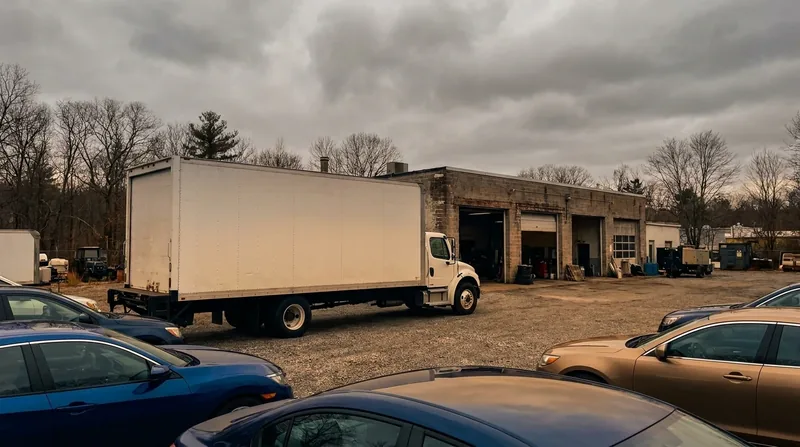
How to Start a Used Car Dealership in New Mexico: MVD Dealer License, Bond and Course
How to Start a Used Car Dealership in New Mexico: MVD Dealer License, Bond and Course
If you want to sell used vehicles in New Mexico, you need a dealer license from the Motor Vehicle Division (MVD) of the Taxation and Revenue Department. Most people searching for a new mexico auto dealer license or a new mexico used car dealer license are really asking one question: what has to be finished, and in what order, before MVD will issue the license? The answer is a chain of prerequisites. Your entity, tax registration, location, education, bond and application all depend on each other, so the sequence matters as much as the paperwork.
This guide walks through that sequence in the order we recommend. It covers the business entity, the tax ID, the established place of business, the 8-hour education requirement, the $50,000 surety bond and the license application. Where a figure is set by an agency, we tell you which agency to ask.
Informational content, not legal or tax advice. This article explains how New Mexico business formation and dealer licensing generally work. It is not legal, tax or financial advice. Dealer licensing rests on statutes and rules that change, so confirm current requirements with MVD, and talk with a New Mexico attorney and a CPA before you sign a lease, buy a bond or choose an entity structure.
What you need before you start
Gather these items before you file anything. One missing document can block the next filing.
- A legal entity, such as an LLC or a corporation, registered with the New Mexico Secretary of State
- A registered agent for service of process and a registered office in New Mexico
- A free Business Tax Identification Number (BTIN, formerly CRS) from the Taxation and Revenue Department
- An established place of business that meets the requirements in Step 3, including a lease of at least six months if you rent
- A written zoning confirmation from your city or county, certified on the MVD inspection form
- Proof of completion for the 8-hour approved education course
- A corporate surety bond of $50,000 issued in the exact business name you will trade under
- Any flat annual business registration your city or county requires for the lot
- The current MVD dealer license application, fee and forms, which you should download directly from MVD each year
Step-by-step: how to get a New Mexico used car dealer license
Step 1: Form your business entity with the Secretary of State
New Mexico has no general business license, so your first filing is with the New Mexico Secretary of State. All business filings are made online through the SOS Enterprise Business Filing System at enterprise.sos.nm.gov. Start by checking your name at the business search. An LLC name must include limited liability company, limited company, L.L.C., LLC, L.C. or LC. The name must also be distinguishable from existing New Mexico LLCs, limited partnerships and corporations, foreign entities authorized here and reserved names. If you want to hold the name before you file, you can reserve it for 120 days (not renewable) for $20.
The filing fees are $50 for LLC Articles of Organization and $100 for corporation Articles of Incorporation. The Secretary of State does not publish a standard processing time, and all filings are reviewed before the certificate is issued. You will be notified by email of approval, rejection or a correction request. For LLC filings, expedited service costs $150 for same business day service when received before 2:00 p.m. (next business day if received later), or $100 for two business day service. Expedited fees are paid separately and are nonrefundable.
Your choice of entity affects your annual obligations. An LLC files no annual or biennial report and pays no LLC franchise tax. A corporation files a Corporate Report every two years at $25, with the first report due within 30 days after the certificate of incorporation is issued, and pays a $50 annual corporate franchise tax reported on form CIT-1 along with its flat 5.9% corporate income tax. An LLC that is taxed as a default pass-through does not owe the $50 franchise tax. Which structure fits your dealership is a tax question, so ask a CPA before you choose.
Your entity also needs a registered office and registered agent in New Mexico. The agent can be a New Mexico resident or a business with a New Mexico place of business at the registered office address. Changing the agent or office later costs $20 for an LLC and $25 for a corporation.
Step 2: Get your Business Tax Identification Number
Register with the Taxation and Revenue Department at tax.newmexico.gov to obtain your BTIN. The number is free. It is a tax registration, not a license. New Mexico has no sales tax. Instead, the seller pays a gross receipts tax. The state rate is 4.875%, and combined state and local rates run from 5.25% to 9.4375% under the schedule effective July 1, 2026 through June 30, 2027. The rate depends on where the sale happens. Check whether you must register for a permit at who must register a business, and ask TRD and MVD how vehicle transactions are taxed and reported, since vehicle sales can involve steps beyond the general gross receipts tax.
Step 3: Establish a qualifying place of business
MVD requires an established place of business, and the rules are specific:
- An enclosed building on a permanent foundation. A tent, trailer or open lot does not qualify.
- Local zoning that allows an automobile dealership at that address.
- A lease of at least six months if you do not own the building.
- Room to display at least one vehicle inside the sales area.
- Customer parking on site.
- A records area where you can keep title, sales and bond documents.
Your city or county must certify zoning compliance on the MVD inspection form. Call the planning or zoning office before you sign a lease. A signed lease for a site the city will not certify wastes your deposit and your time. Cities and some counties also charge their own flat annual business registration. The amount varies by jurisdiction, so check with the city or county clerk for the lot's address. A new location, even under the same owner, needs its own supplemental license from MVD.
Step 4: Complete the 8-hour approved education course
An initial applicant for a non-franchise dealer license must complete eight hours of approved education before MVD will issue the license. This is the path for a used car dealership. Franchise (new car) dealers follow different requirements, so do not apply franchise rules to your plan. Confirm that the course provider is approved for MVD purposes before you pay, and keep the completion certificate with your application file. Course prices vary by provider, so ask each one for its fee and check with MVD that the course counts.
Step 5: Obtain the $50,000 corporate surety bond
A corporate surety bond of $50,000 is required before MVD issues a used car dealer license. A motorcycle-only dealer needs a $12,500 bond instead. The bond must stay continuous, which means it cannot lapse between renewals, and it must be in the same business name as the dealership. If your entity is registered as Sample Auto LLC on the Secretary of State record, the bond must read the same way. Do not use a shortened name or a trade name unless you have confirmed with MVD that it is accepted.
The bond premium is paid to the surety company, not to the state, and it is not a fixed fee. It depends on the surety's underwriting of your business. Get quotes from a surety agent, and ask whether the premium is billed annually or in another way. Do not sign a bond until you know the exact name, bond amount and effective date that MVD will accept.
Step 6: File the MVD dealer license application
Once the entity, BTIN, location, education certificate and bond are in hand, file the dealer license application with MVD. The package generally includes the application form, the license fee, the original surety bond, the education certificate, the zoning-certified inspection form and your entity documents. The license fee is set by MVD. Check with MVD for the current fee, forms and renewal dates before you send money. Ask MVD whether an inspection visit is required after the paperwork is accepted, and what it will check.
Step 7: Set up your business operations and tax reporting
Open a bank account in the exact business name, keep sales records that support your gross receipts tax returns, and confirm the local registration your city or county requires before you open. Gross receipts tax is reported under your BTIN, so keep the number on every invoice and tax filing. If you plan to sell to customers outside your city or county, ask TRD how the rate is determined for each sale.
Step 8: Calendar your renewals and continuing education
The dealer license is annual. Each year, you must submit the renewal application, the renewal fee and the original surety bond by the expiration date. Renewal also requires four hours of continuing education. Put the expiration date, bond renewal date and education deadline on one calendar, and renew early. A lapsed license or bond can stop sales until it is reinstated, so treat the expiration date as a hard deadline.
Costs at a glance
Where a cost is set by an agency or provider, the table says who to ask.
| Item | Amount | Where to confirm |
|---|---|---|
| LLC Articles of Organization | $50 | New Mexico Secretary of State |
| Corporation Articles of Incorporation | $100 | New Mexico Secretary of State |
| Name reservation (120 days, not renewable) | $20 | New Mexico Secretary of State |
| Expedited LLC filing | $150 same business day, or $100 for two business days | New Mexico Secretary of State |
| LLC annual or biennial report | None required | New Mexico Secretary of State |
| Corporate Report (biennial) | $25 | New Mexico Secretary of State |
| Corporate franchise tax (annual) | $50 | Taxation and Revenue Department |
| Business Tax Identification Number | Free | Taxation and Revenue Department |
| Change of registered agent or office | $20 LLC, $25 corporation | New Mexico Secretary of State |
| Corporate surety bond ($50,000) | Premium set by the surety company, not a state fee | A licensed surety agent |
| Used car dealer license fee | Check with MVD | Motor Vehicle Division, check with MVD |
| 8-hour education course | Varies by provider | Approved provider, confirm with MVD |
| City or county business registration | Flat annual amount, varies | Your city or county clerk |
Common mistakes to avoid
- Mismatched names. The bond, license and entity record must match. A bond in a shortened name can delay the whole application.
- Short leases. A lease under six months does not meet the place of business requirement.
- Temporary structures. The sales office must be an enclosed building on a permanent foundation.
- Skipping zoning certification. Signing a lease before the city or county confirms the use invites a costly rejection.
- Assuming a sales tax. New Mexico has no sales tax. The seller pays gross receipts tax, and the combined rate depends on location.
- Missing the corporate report. An LLC files no annual report, but a corporation must file its biennial report and pay its annual franchise tax.
- Moving without a supplemental license. A new location needs its own supplemental license before you open.
- Letting the renewal lapse. The renewal application, fee, original bond and four hours of continuing education are all due on time.
- Confusing dealer types. Franchise dealer rules differ from the non-franchise path covered here.
What to expect
Applicants who prepare the entity, location and bond in parallel, rather than one after another, generally move through the process faster. We cannot promise a specific timeline or approval, because the Secretary of State does not publish a standard processing time and MVD's review depends on the completeness of each file. Plan for correction requests. If you receive one, answer it quickly and keep copies of every submission. Treat the first license as the start of an annual compliance cycle, not a one-time event.
Questions to confirm with the agencies
Before you file, ask MVD for the current dealer license fee, the current forms, the renewal dates and whether an inspection is required. Ask the city or county clerk for the local registration amount and the zoning certification process. Ask TRD how vehicle sales are reported under the gross receipts tax. Ask your surety agent for the exact premium and billing schedule.
Free help is available. The New Mexico Small Business Development Center offers advising at nmsbdc.org, and the SBA's New Mexico district office information is at sba.gov/district/new-mexico. For the entity, lease and bond decisions, a New Mexico attorney and a CPA are worth the cost, especially before you sign anything with a multi-year term.
Reminder: This article is informational content, not legal or tax advice. Verify every figure with the agency that administers it before you act, and consult qualified professionals for your specific situation.